case study

Electrical Contractor for Sydney Data Centres

Raiden Technologies delivered critical-power electrical works for a 190MW hyperscale data centre: the installation, linking and testing of the lithium-ion UPS battery systems backing 24 UPS units across three data halls. Every connection was completed to spec under strict arc-flash safety controls.

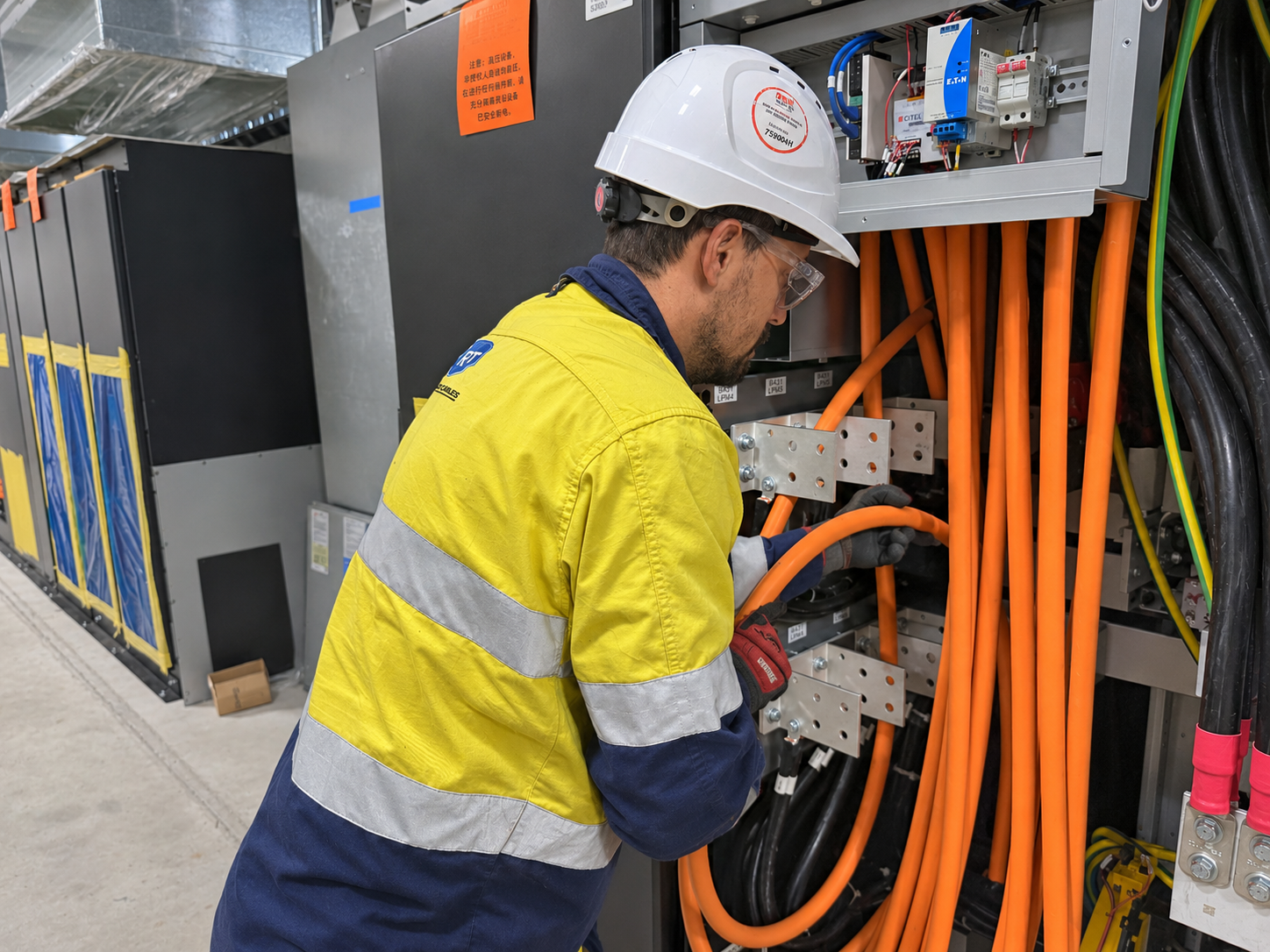
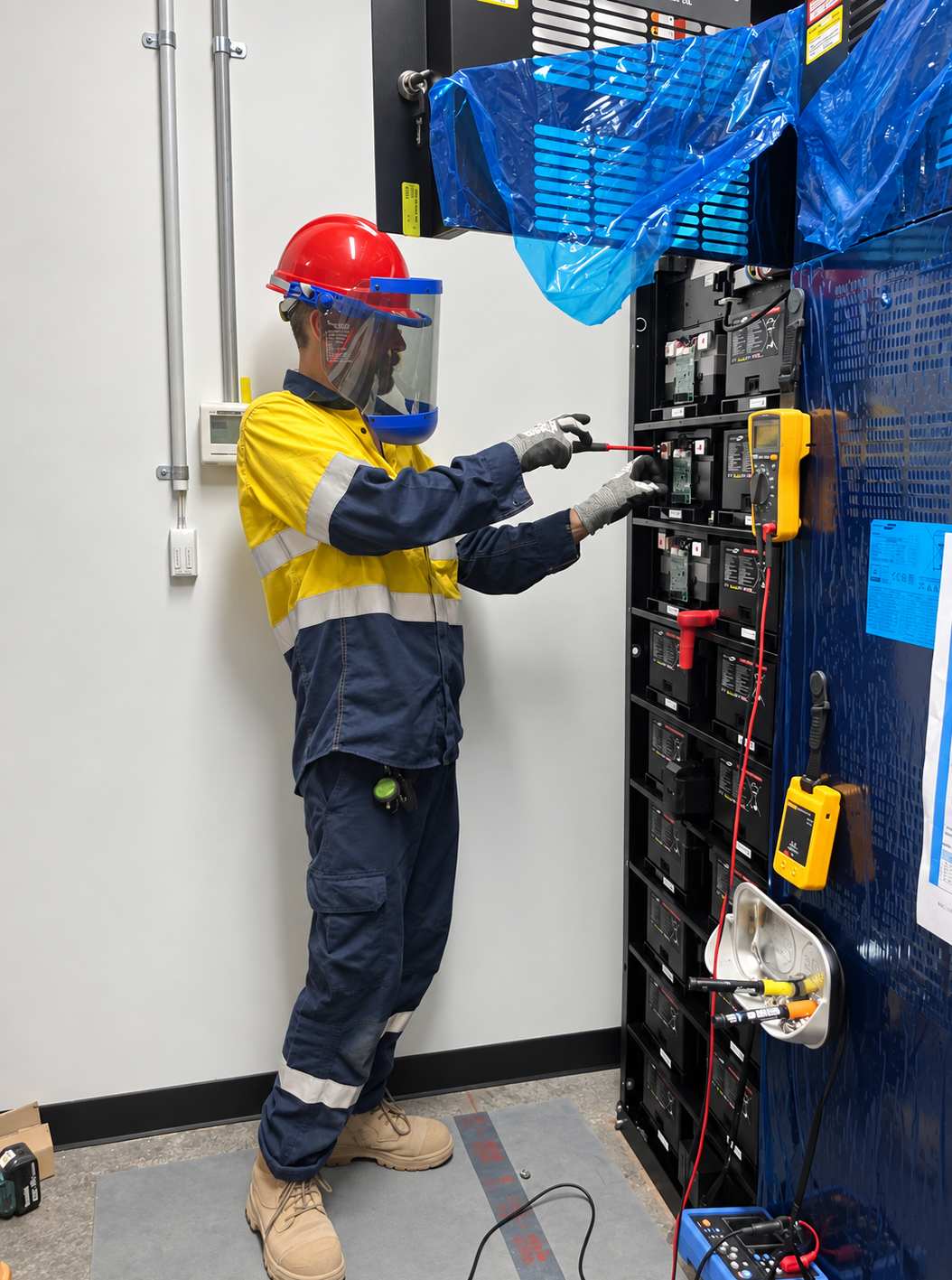
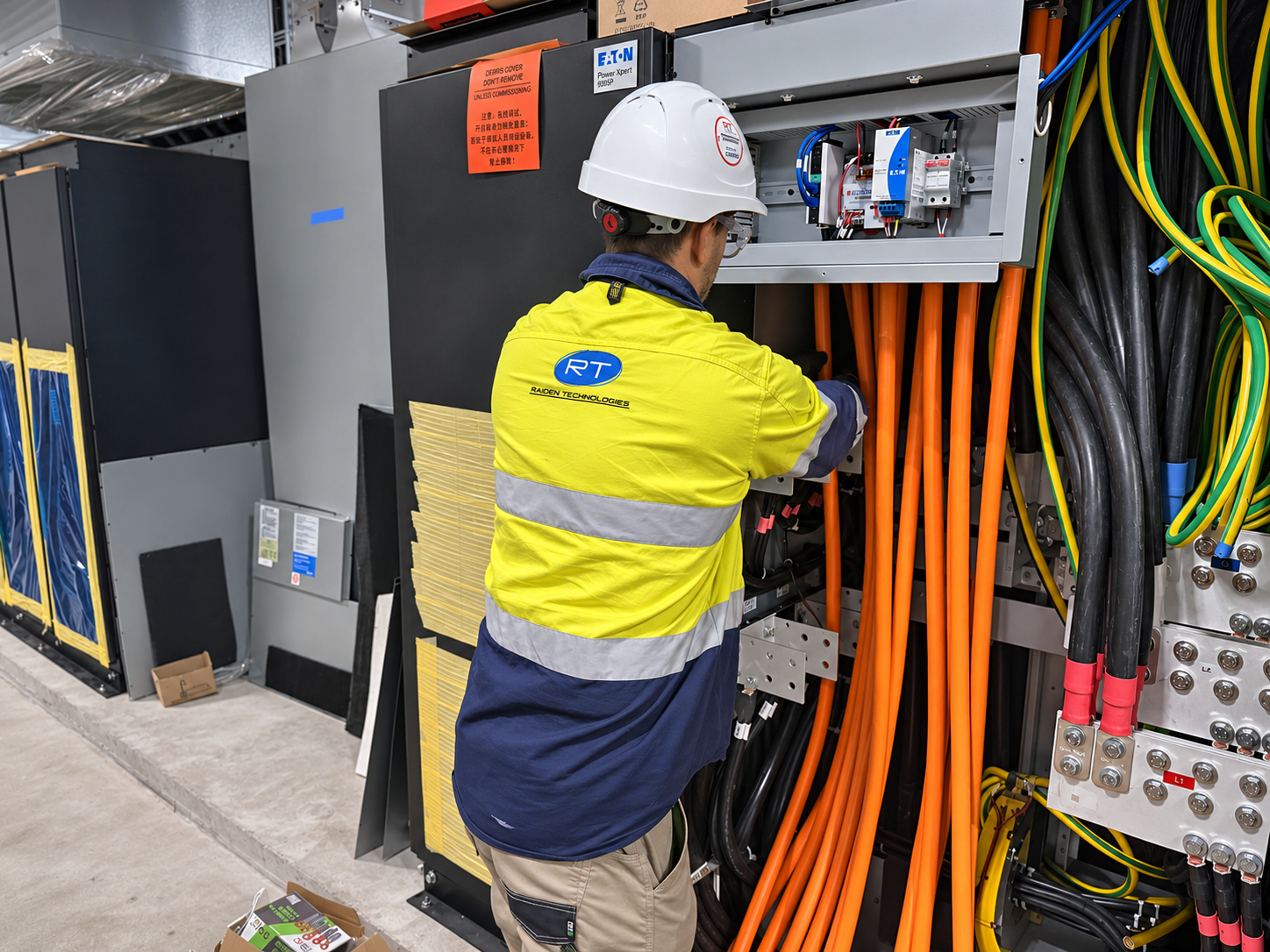
Technician at the electrical control panel

Installing UPS batteries in a hyperscale data centre involves running high-capacity DC cabling from each UPS to its DC marshalling cabinet and battery cabinets, then loading, linking, torquing and testing every battery module. Raiden completed this for 24 UPS units and 2,856 battery modules at a 190MW hyperscale data centre.

Project summary

Raiden was contracted to deliver UPS battery works across three data halls of a 190MW hyperscale data centre, each split into four cells with two UPS units per cell. The team installed the DC cabling between 24 UPS units, their DC marshalling cabinets and 168 battery cabinets. They then loaded, linked and tested 2,856 lithium-ion battery modules, with all live battery work done in Category 2 arc-flash PPE.

Client
Confidential (NDA)
Location
Sydney, NSW
Project date
2026-04-10

The challenge

Each of the 24 UPS units needed its own DC marshalling cabinet feeding seven battery cabinets. That added up to thousands of high-current connections, every one of which had to be terminated, torqued and tested to exact specification. The work involved energised DC battery systems in a live hyperscale environment, so it demanded zero-defect workmanship, strict arc-flash safety and full traceability on every termination.


The solution

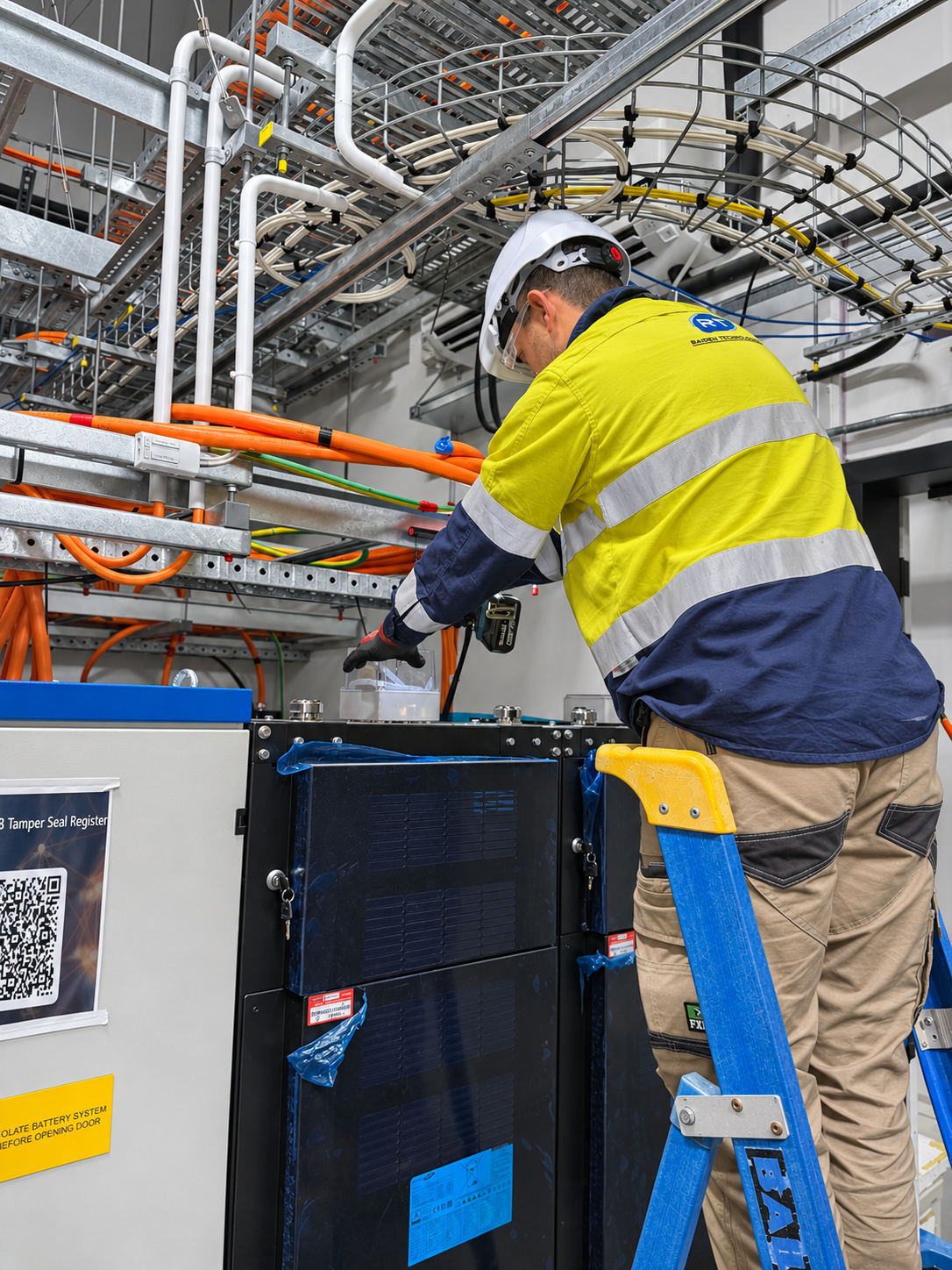
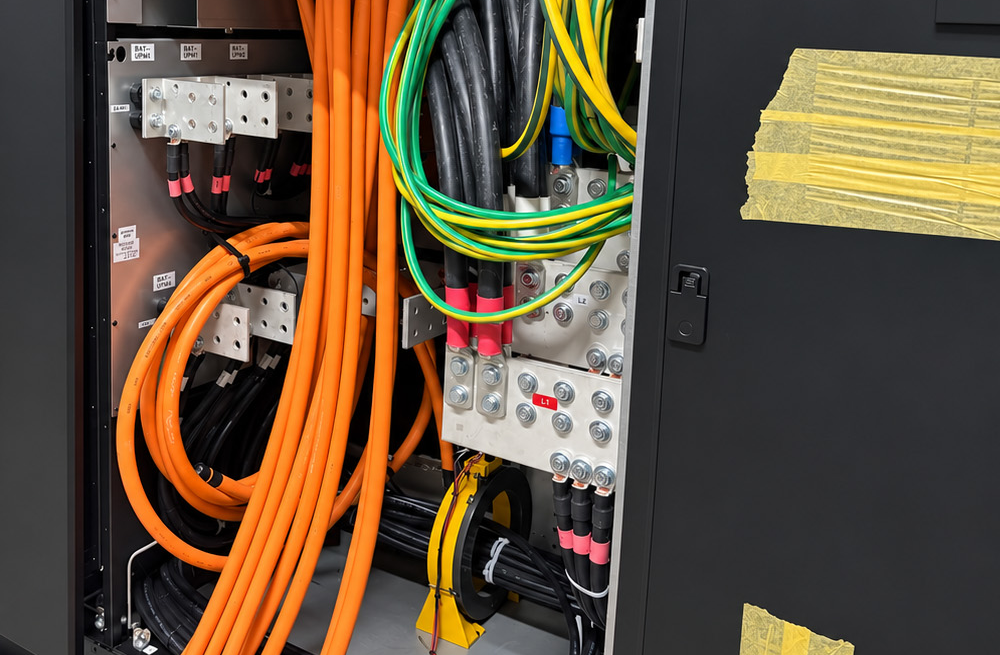
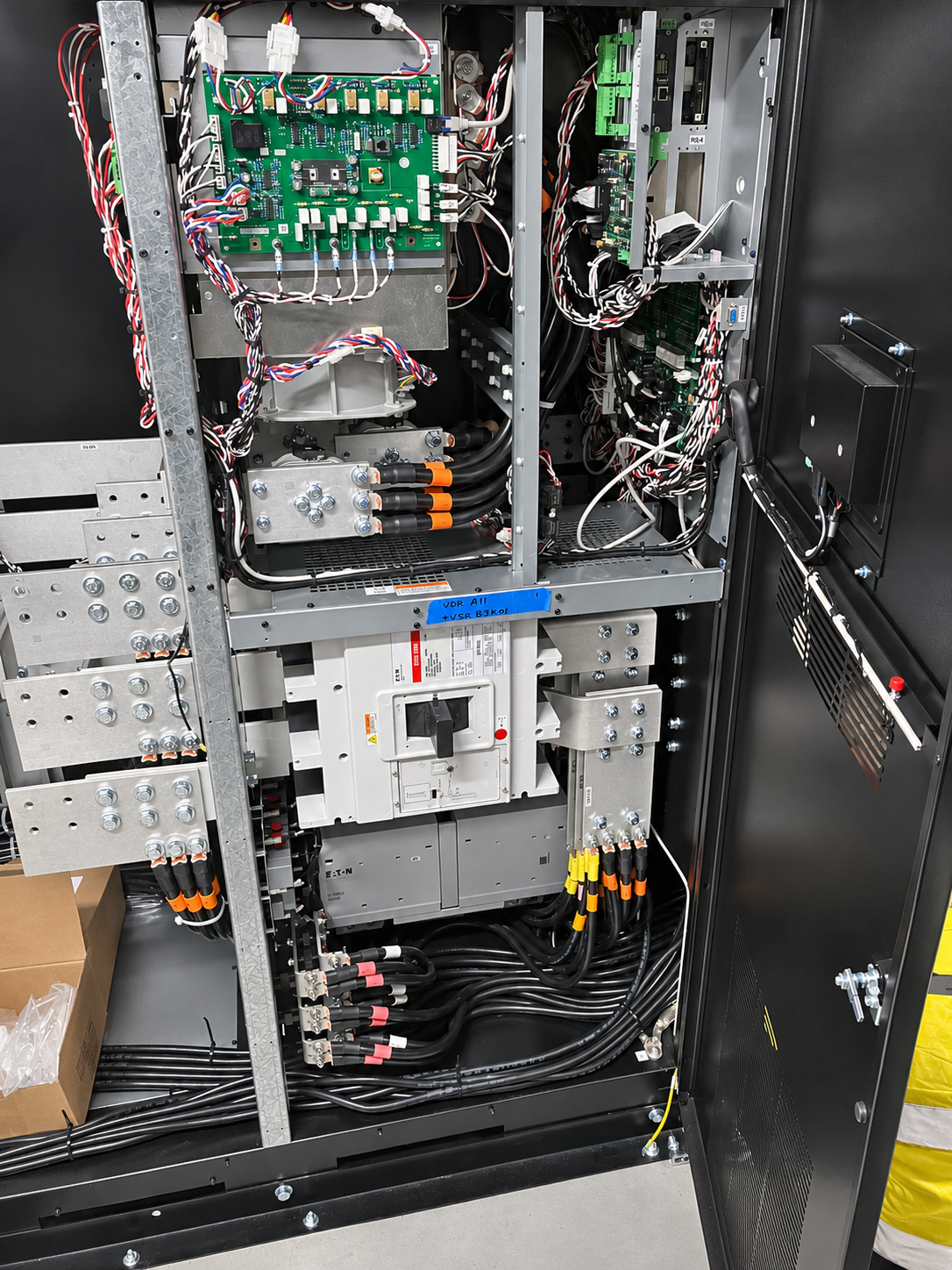
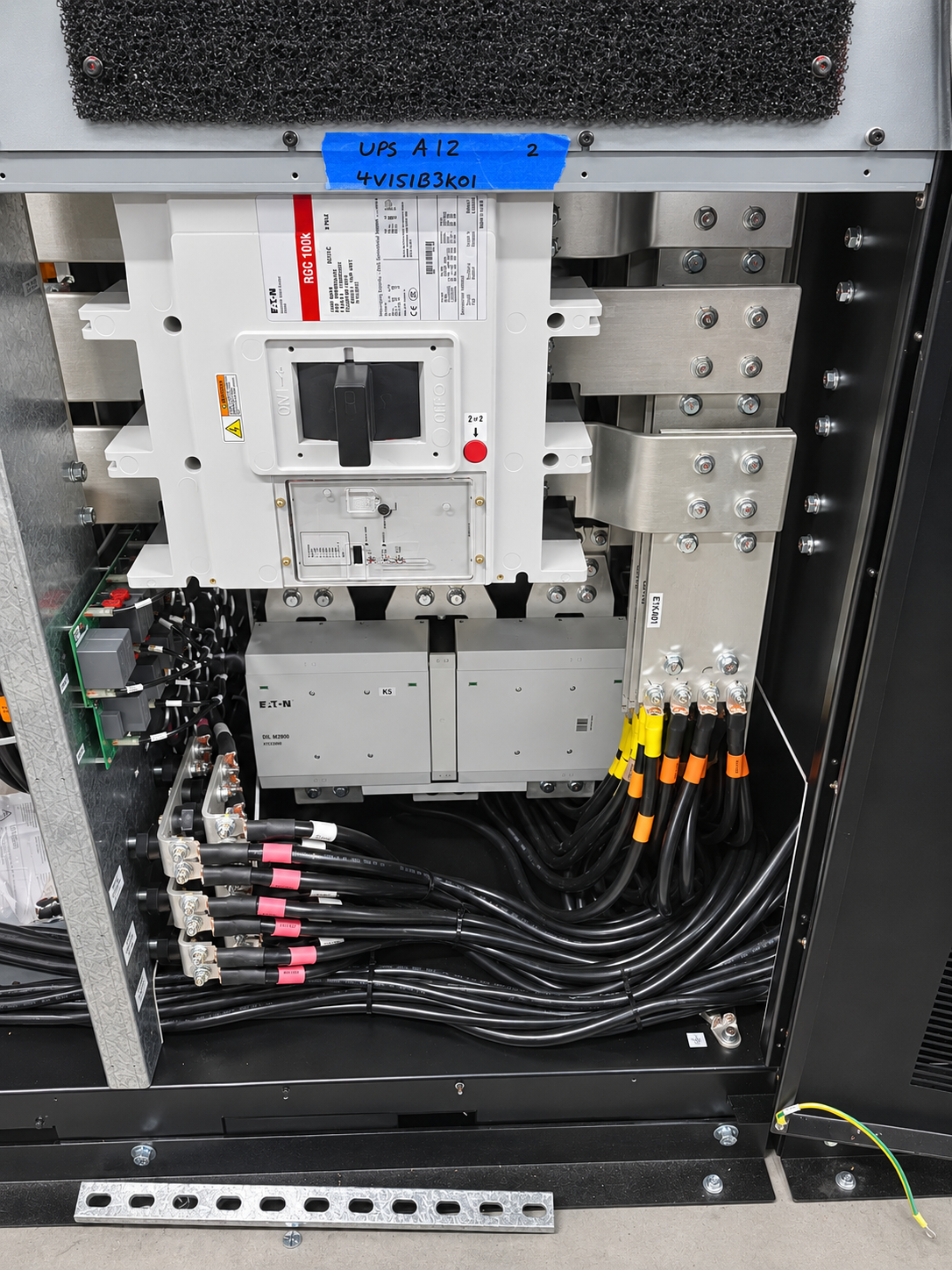
Raiden ran 240mm² DC cables from each UPS in the electrical room to its DC marshalling cabinet, then 185mm² cables from each marshalling cabinet to its seven battery cabinets. Every termination was torqued and torque-marked at both ends. The team loaded 17 lithium-ion modules into each cabinet, tested each module’s voltage and impedance, and linked each cabinet in series: sanding the links, applying conductive grease, testing for dead, resistance-testing and torquing to spec, all in Category 2 arc-flash PPE.

Systems Installed

Security and electrical systems delivered on this project.

  • UPS DC Feeder Cabling

    240mm² DC cabling from 24 UPS units to their dedicated DC marshalling cabinets

  • DC Marshalling Distribution

    24 DC marshalling cabinets, each feeding 7 battery cabinets over 185mm² cabling

  • Lithium-ion UPS Batteries

    2,856 lithium-ion modules loaded across 168 battery cabinets (17 per cabinet)

  • Series Battery Linking

    Every module linked in series, with links sanded, greased, resistance-tested and torqued to spec

  • Module Testing

    Voltage and impedance testing of every battery module before linking

  • Arc-flash Safe Work

    All battery linking done in Category 2 arc-flash PPE under controlled safe-work procedures

The outcome

All 24 UPS units across the three data halls were fully connected to their battery systems, with every termination torqued, marked and double qualified by a second technician. Every module thoroughly tested, with results recorded to verify performance and provide a clear record for handover. The data centre’s critical backup power was delivered to specification, ready for commissioning and to support uninterrupted operation of its 190MW capacity.

Outcome metrics

UPS units
24
battery modules
168
data halls
3
Verified Terminations
100%

Project gallery

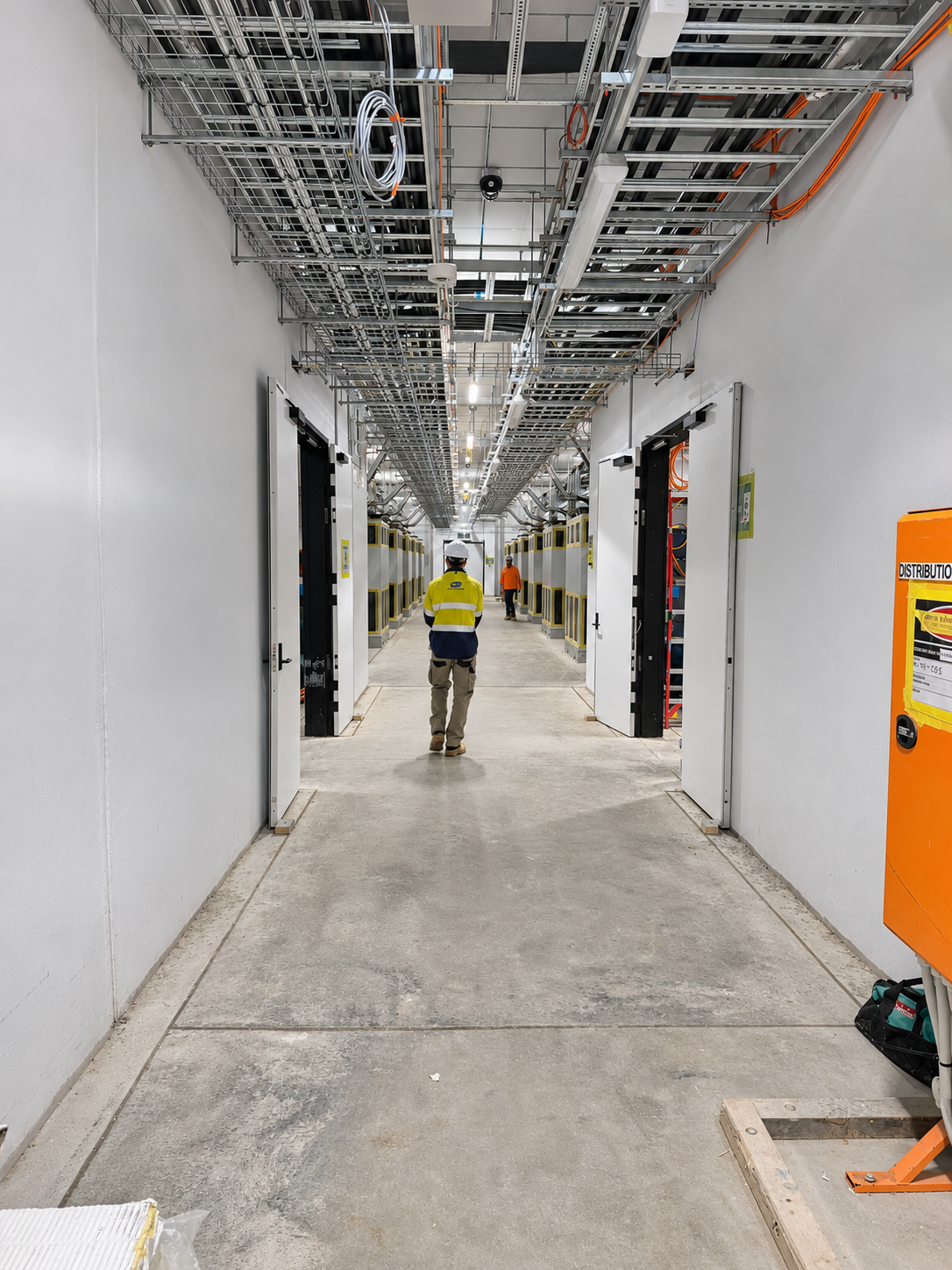
Two workers in an unfinished interior
Field Technician Amid Cable Trays
Technician servicing an industrial control cabinet
Technician wiring an electrical cabinet
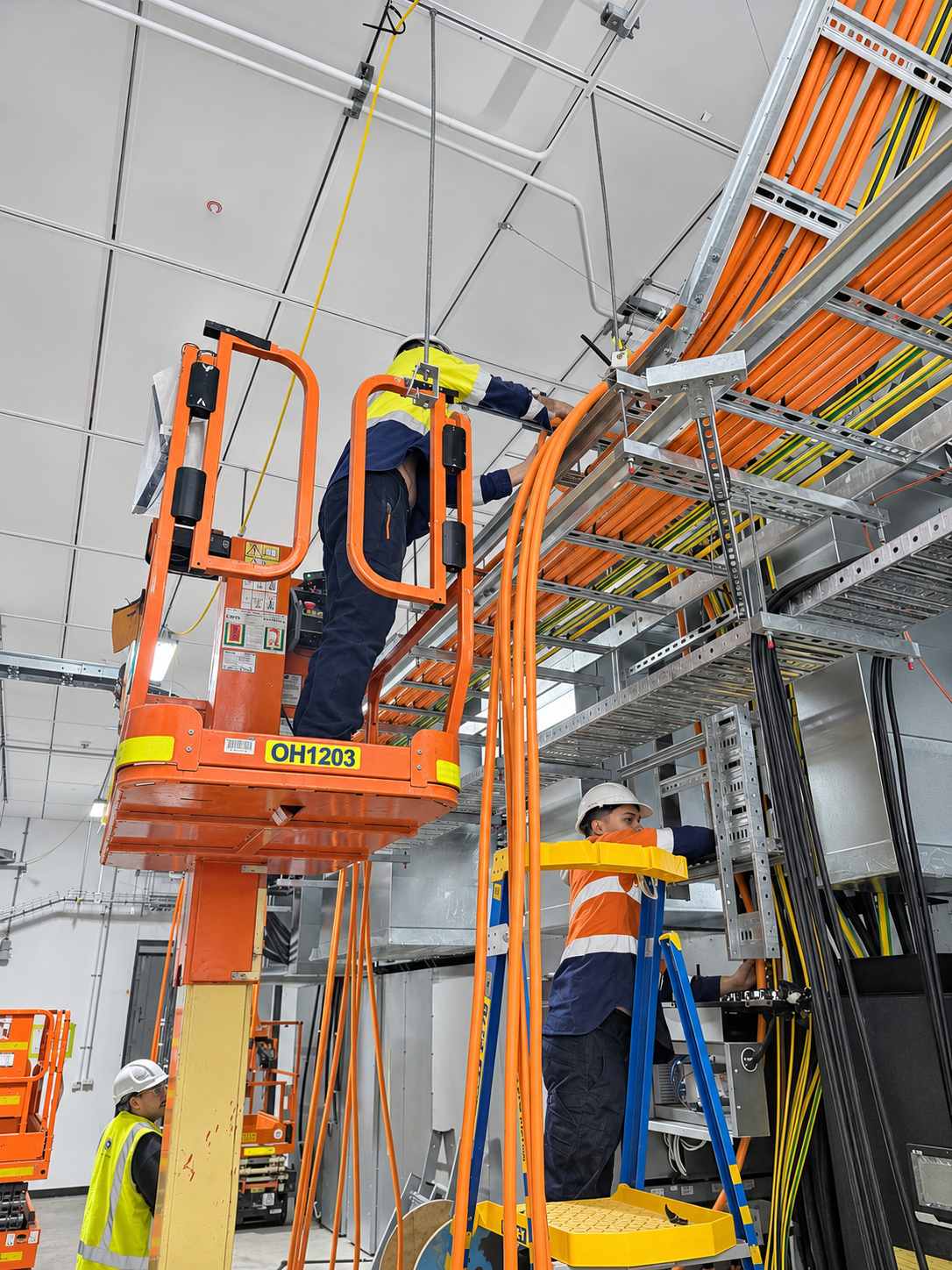
Workers on an Elevated Industrial Platform
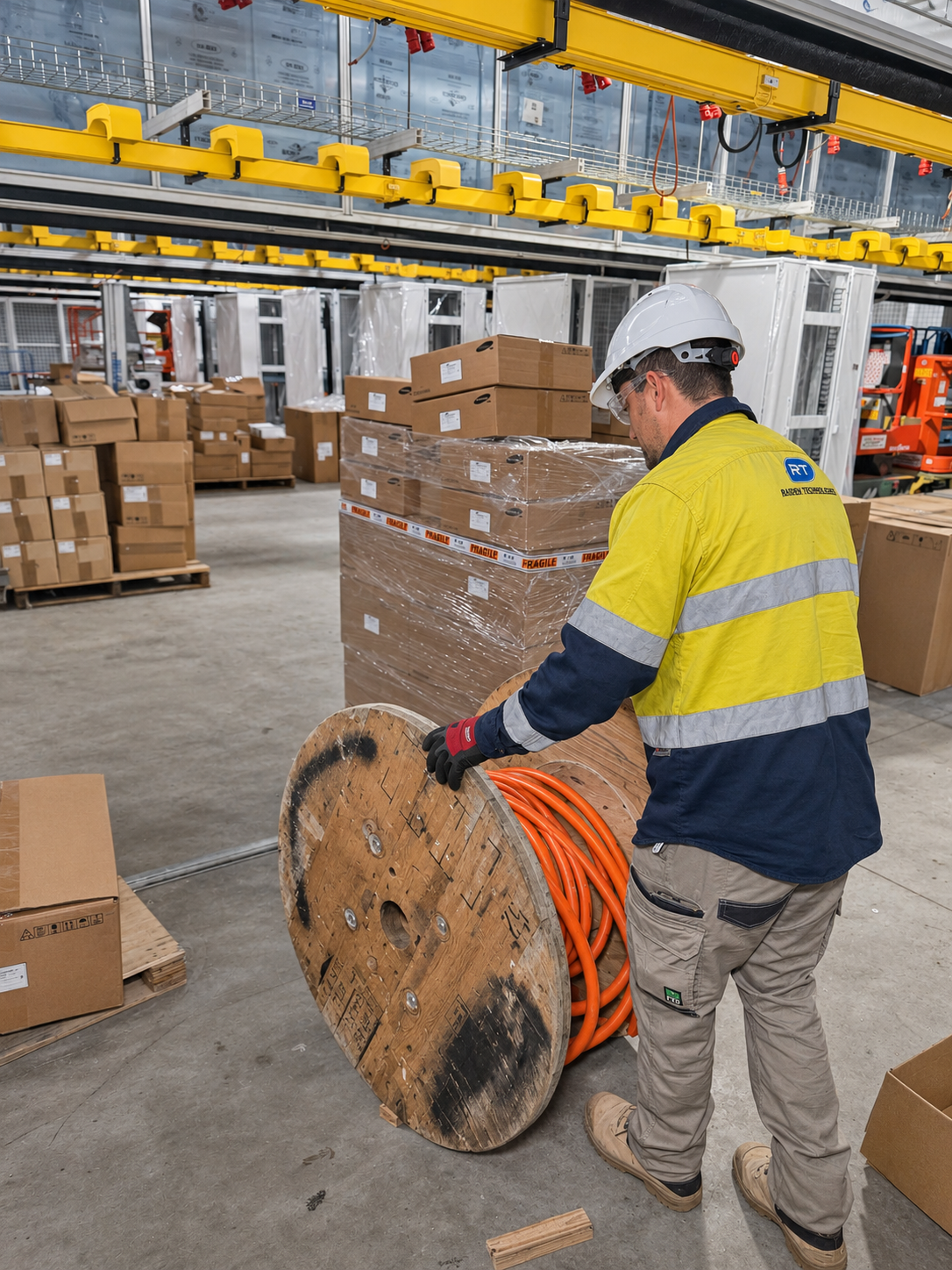
Worksite technician with RT Raiden cable reel
Battery
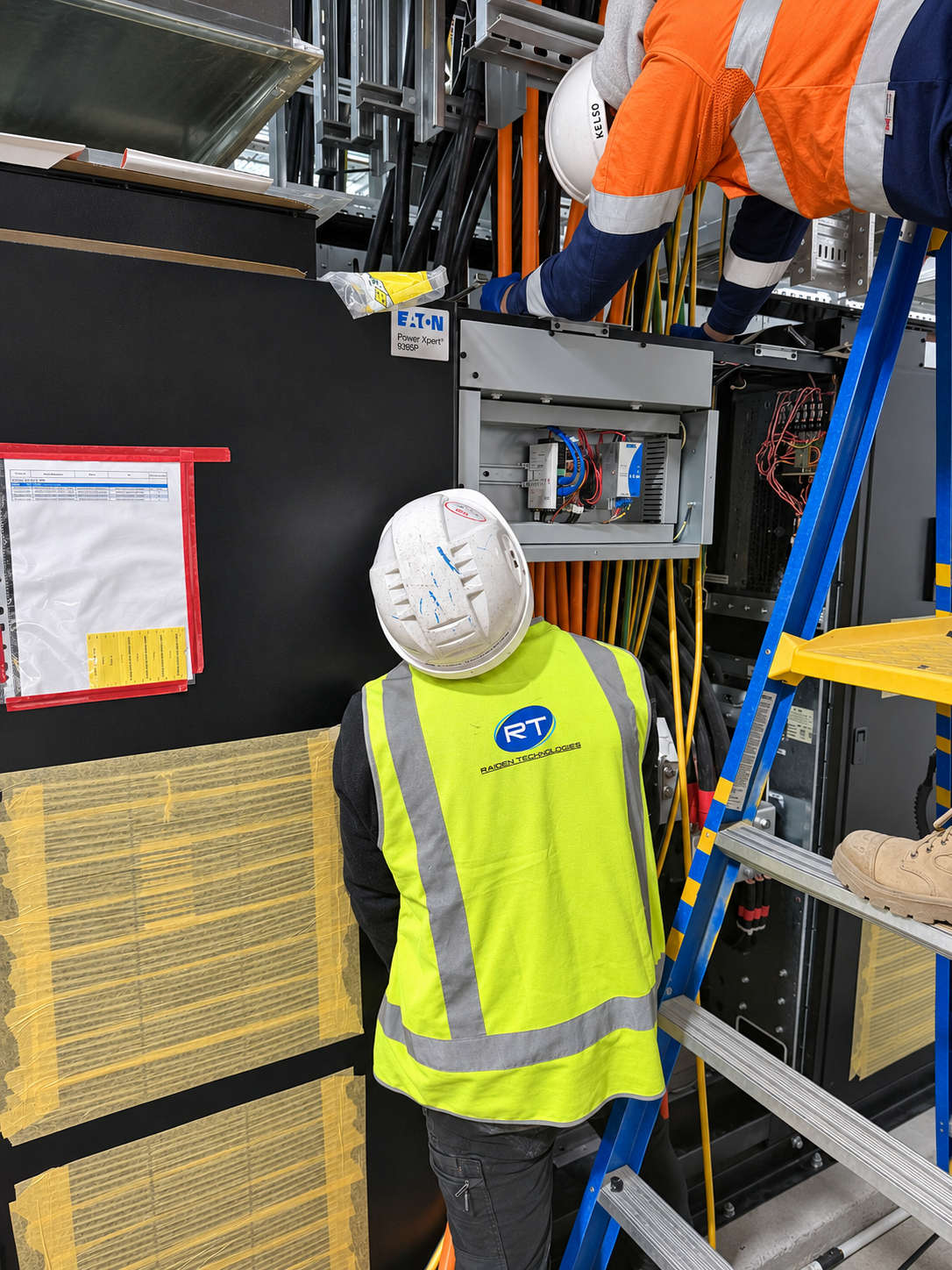
Technicians servicing power control cabinets
Raiden Blog 12_2
Polished Electrical Control Cabinet
Polished industrial electrical cabinet photograph
Retouched industrial electrical cabinet

Frequently asked questions

What does a data centre UPS battery installation involve?

Running DC cabling from each UPS to its DC marshalling cabinet and battery cabinets, terminating and torque-marking every connection, then loading, testing and linking the battery modules. At this 190MW hyperscale data centre, Raiden did this for 24 UPS units and 2,856 modules.

What is a DC marshalling cabinet?

A DC marshalling cabinet is a distribution point between a UPS and its battery cabinets. It brings together and protects the DC connections, so multiple battery cabinets can feed a single UPS safely.

Why are batteries tested before they’re linked?

Testing each module’s voltage and impedance before linking confirms every module is healthy and well matched. One weak module can reduce the performance and reliability of the whole battery string.

Why is arc-flash PPE needed for battery works?

Large lithium-ion UPS battery systems store a lot of DC energy that can’t be fully isolated while modules are being linked. Category 2 arc-flash PPE protects electricians from burns and injury if an arc flash happens.

Why is torque marking important on data centre terminations?

Torque marking shows visually that each connection was tightened to the specified setting and makes it easy to spot movement later. Loose high-current connections can overheat and cause failures in critical power systems.

Next step

Get a Site Assessment

Tell us about your site requirements, compliance needs and security or electrical scope. Raiden delivers integrated capability under one accountable contract.